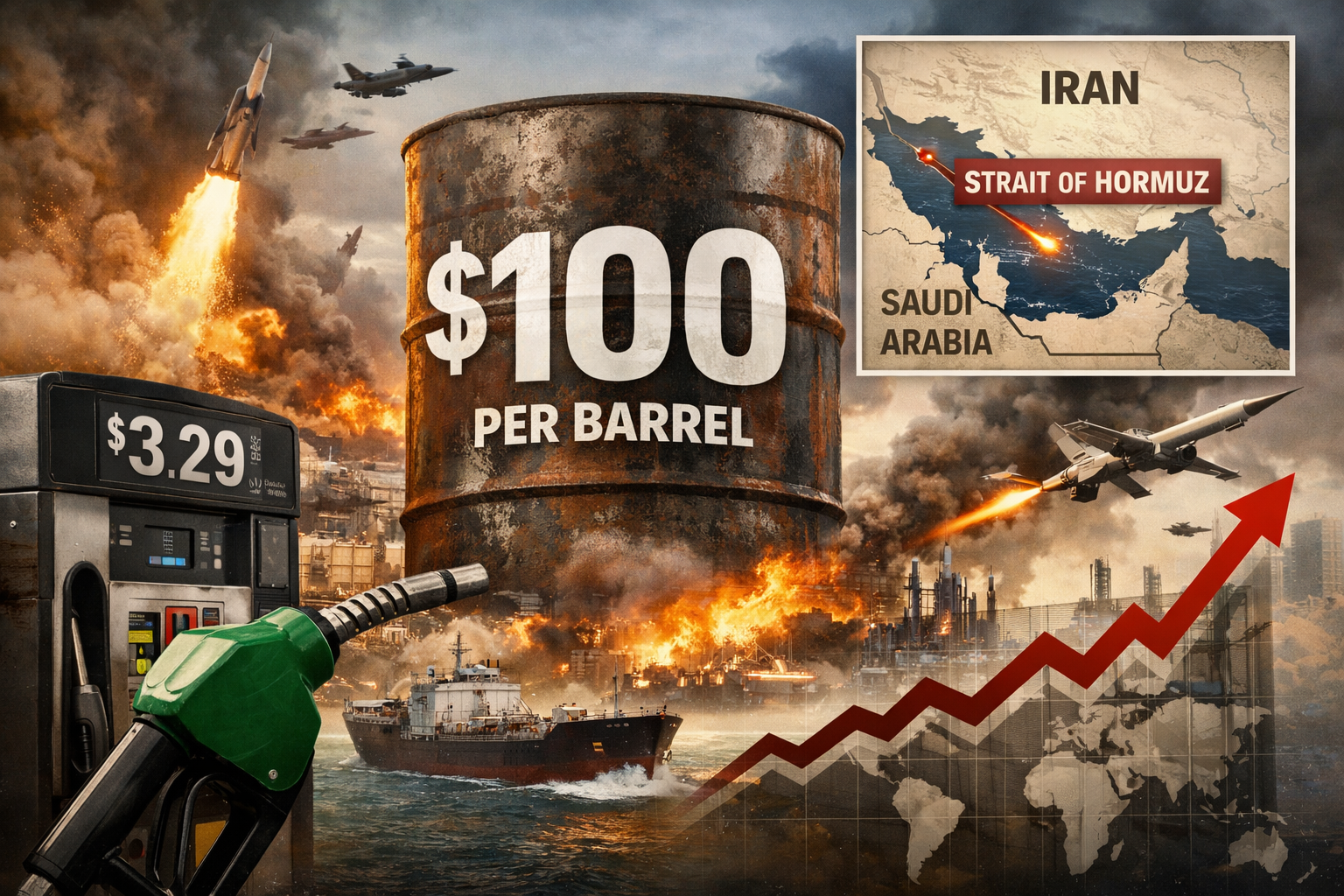
Global oil prices have surged dramatically in early 2026 following the outbreak of a major conflict involving Iran. Military strikes, disruptions to shipping routes, and damage to energy infrastructure across the Middle East have shaken energy markets and raised concerns about inflation, fuel costs, and the stability of the global economy. Oil prices have now exceeded $100 per barrel, marking the first time prices have reached that level in more than three years.
Background of the Conflict
The current surge in energy prices stems from escalating military conflict involving Iran and a U.S.–Israel coalition. The war began in early March 2026 after a series of strikes on Iranian targets and retaliatory missile and drone attacks across the region.
Energy markets reacted almost immediately. Oil production, refining, and transportation systems across the Persian Gulf region were disrupted, causing global supply fears and rapid price increases.
Disruption of Global Oil Supply
A major driver of rising prices is the disruption of shipments through the Strait of Hormuz, one of the most critical energy corridors in the world. Approximately 20% of the world’s oil supply normally passes through this narrow shipping route connecting the Persian Gulf to global markets.
The conflict has severely reduced tanker traffic and forced some producers to cut output or reroute shipments. In some cases, drone attacks and security threats have halted operations at key refineries and export facilities in the region.
As a result, millions of barrels of oil per day have been temporarily removed from the global market, creating a major supply shock.
Price Surge in Oil Markets
Oil prices have risen sharply since the conflict began. Within a single week, U.S. oil prices jumped by more than 36%, while international Brent crude increased roughly 28%.
Recent trading has pushed prices even higher:
- Brent crude: about $101–$108 per barrel
- West Texas Intermediate (WTI): about $107 per barrel
Some analysts warn that prices could rise further if shipping disruptions worsen or additional energy infrastructure becomes a target in the conflict.
Impact on Gasoline and Consumers
Higher crude oil prices are already affecting consumers, particularly in the United States and Europe. Gasoline prices have increased nationwide as fuel suppliers adjust to higher wholesale costs.
In Massachusetts, average gasoline prices have risen to around $3.29 per gallon, reflecting the broader trend across the United States.
Higher fuel prices can ripple across the entire economy by increasing transportation costs, raising prices for goods and services, and contributing to inflation. Economists warn that sustained energy price increases could slow global economic growth.
Global Economic Consequences
Beyond oil markets, the war has begun affecting global trade and financial markets. Shipping costs have increased, airline routes have been disrupted, and some countries have begun stockpiling energy supplies in anticipation of prolonged instability.
Energy-dependent economies in Europe and Asia may face particularly strong impacts because many rely heavily on Middle Eastern oil and natural gas imports.
Outlook
Experts say oil markets will likely remain volatile as long as the conflict continues. If the Strait of Hormuz remains restricted or additional energy facilities are targeted, prices could continue to climb and potentially reach $150 per barrel in a worst-case scenario.
However, governments may attempt to stabilize markets by releasing emergency oil reserves, rerouting shipping lanes, or increasing production in other regions.
The ongoing war with Iran has triggered one of the largest shocks to global energy markets in recent years. Disruptions to oil production and shipping have driven prices above $100 per barrel, raising fuel costs and economic concerns worldwide. While the long-term outcome depends on how the conflict evolves, the current surge in oil prices demonstrates how geopolitical instability in the Middle East can rapidly affect energy markets and economies across the globe.