orth Korea has recently test‑fired cruise missiles from a newly developed naval destroyer, in what appears to be one of the most significant demonstrations of its growing sea‑based strike capabilities in years. The tests have been reported by multiple international outlets based on North Korean state media and independent coverage — indicating both the technological emphasis and the political messaging behind these launches.
According to state media, leader Kim Jong Un personally oversaw the launch, which involved multiple cruise missiles being fired from the deck of the destroyer. The projectiles successfully flew over long distances and struck designated targets, reportedly islands off North Korea’s west coast.
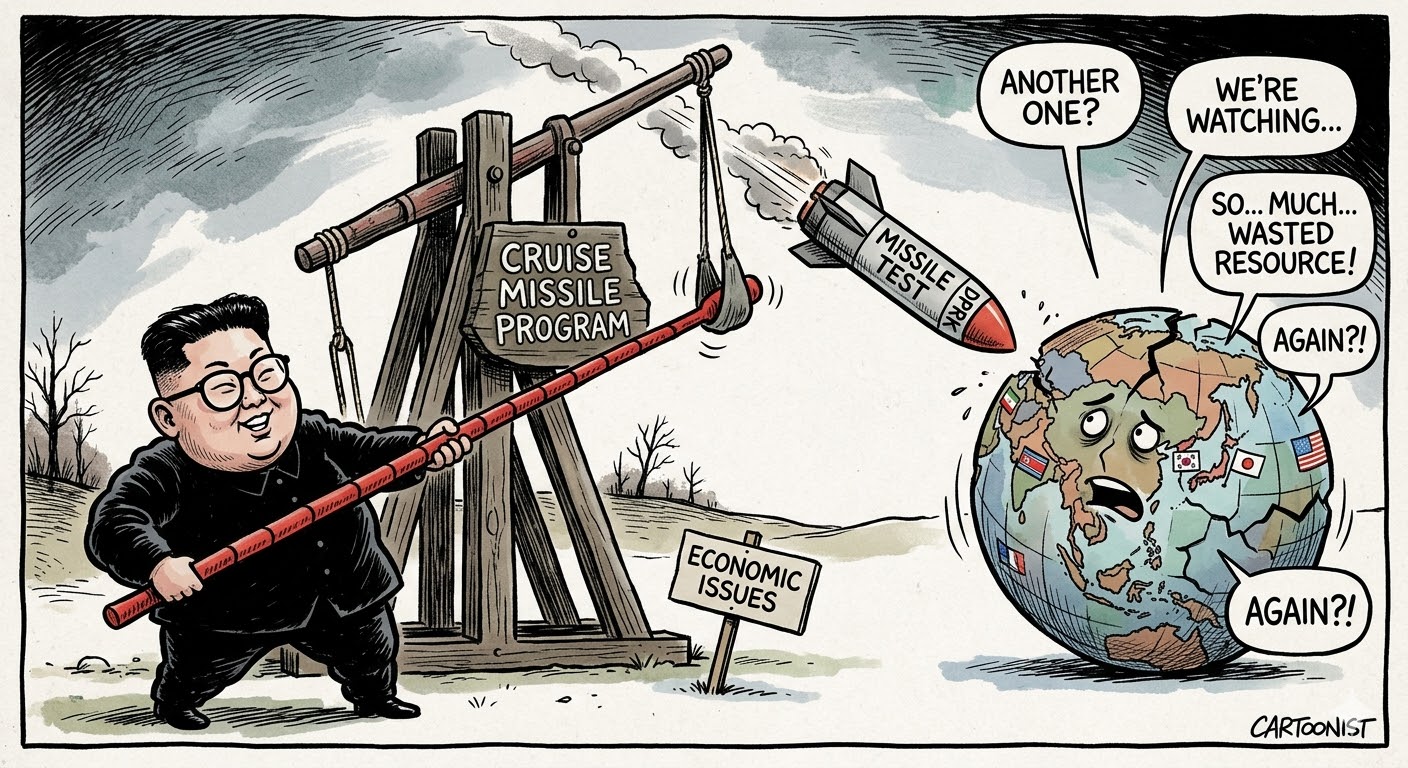
This isn’t the first firing in recent days — Pyongyang has now conducted at least two such cruise missile tests from the same warship in about a week, underscoring both operational progression and strategic signaling.
About the Destroyer and Missile System
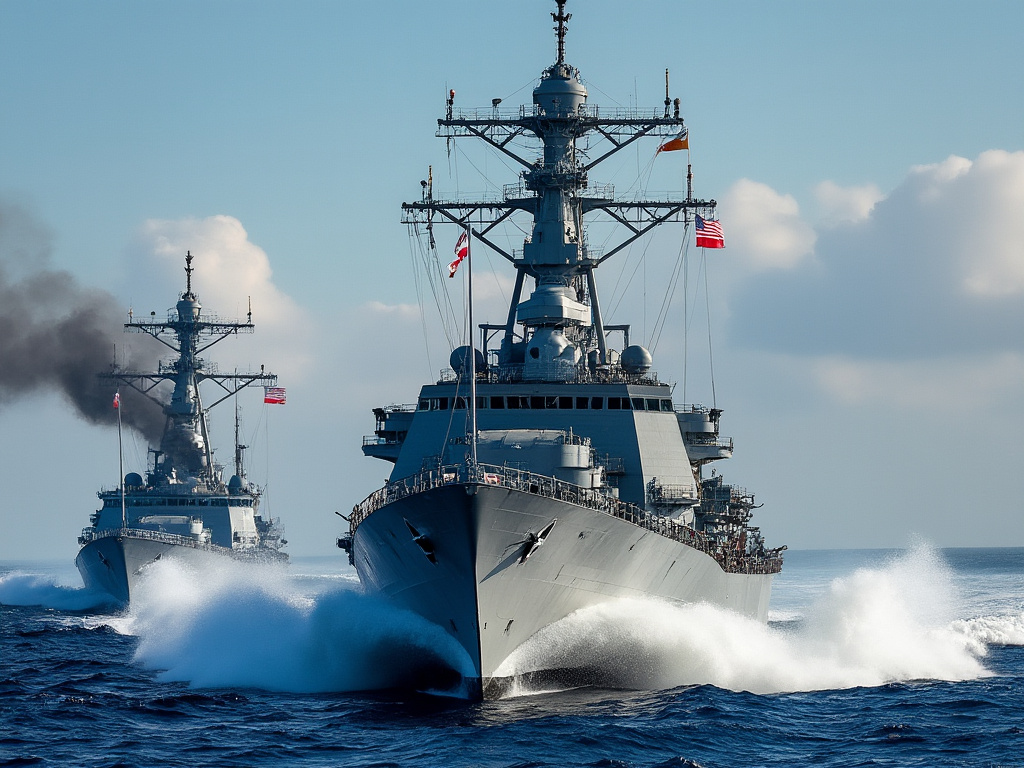
The ship involved in these tests is identified as the Choe Hyon, a 5,000‑ton class multipurpose destroyer that North Korea unveiled last year as part of its ongoing naval modernization efforts. State media describes the vessel as equipped with advanced vertical launch systems (VLS) capable of firing strategic cruise missiles, as well as other weaponry.
Cruise missiles represent a different threat profile from ballistic missiles — they can fly at low altitudes along complex flight paths, are harder to detect early, and may be launched from mobile sea‑based platforms like destroyers to extend Pyongyang’s strike reach.
North Korea’s state reports claim the latest tests helped verify the integrated control systems for the ship’s weapons, tested the operational crew, and demonstrated what it calls a “strategic attack posture.”
Context: Regional Tensions and Military Drills
These tests come during a period of heightened tension on the Korean Peninsula, with joint U.S.–South Korea military exercises underway. Pyongyang routinely cites these drills as justification for its weapons tests, framing them as necessary for regime defense.
North Korean officials, including Kim’s sister Kim Yo Jong, have publicly warned that continued drills make “terrible consequences” likely, reinforcing Pyongyang’s narrative that its weapons development is responsive rather than provocative.
Meanwhile, South Korea and U.S. defense officials continue to monitor North Korea’s missile activities closely, even as some U.S. military assets are shifted to other global hotspots.
What This Means Strategically
Experts and analysts believe these destroyer‑launched cruise missile tests are intended to:
- Demonstrate expanding operational capacities beyond traditional land‑based missile forces.
- Enhance naval strike reach, potentially projecting power further into surrounding seas.
- Signal deterrence to regional actors amid ongoing military drills by South Korea and the U.S.
Unlike ballistic missiles, cruise missiles are typically harder to intercept due to low flight paths and flexibility, potentially complicating defense strategies for neighboring states. The integration of such weapons into North Korea’s navy could reflect a broader effort to modernize its military beyond purely terrestrial systems.
Looking Ahead
North Korea is expected to continue testing and refining its naval weapon systems as part of a broader military buildup. Additional exercises, both naval and missile‑related, are likely to appear in official state broadcasts in the coming weeks.
This ongoing development adds a maritime dimension to a security situation already marked by ballistic missile tests and diplomatic stalemates, keeping tensions on the Korean Peninsula volatile and under close watch by capitals in Seoul, Washington, Tokyo, and beyond.