Anthropic Claude ART enzyme research helped scientists identify array-associated reverse transcriptases—enzymes with CRISPR-like properties hidden in bacteriophage DNA—according to TechCrunch and Reuters coverage dated September 23–24, 2026. The Anthropic Claude ART collaboration pairs Claude’s scientific reasoning with Bay Area wet-lab validation, a showcase CEO Dario Amodei has used to argue AI can accelerate biology without replacing bench work.
Reuters described ART systems as molecular machinery that phages use in ways reminiscent of CRISPR’s programmable cutting logic, though the chemistry and evolutionary path differ. Claude’s role was to sift genomic patterns and propose candidates that human researchers then tested in vitro.
Anthropic Claude ART: what the enzyme system does
TechCrunch’s explainer framed array-associated reverse transcriptases as enzymes that can write and organize genetic information in structured arrays, opening research paths in genome editing, antiviral strategies, and synthetic biology tooling. Calling them “CRISPR-like” is shorthand for programmable nucleic-acid behavior, not a claim that ART is identical to Cas9 systems.
Bacteriophage genomes are evolutionary treasure chests; many defense and counter-defense genes remain poorly annotated. Claude’s pattern hunt reportedly surfaced ART candidates that standard BLAST-style workflows had underweighted, giving the wet lab a shorter shortlist.
Bay Area wet lab meets model hypotheses
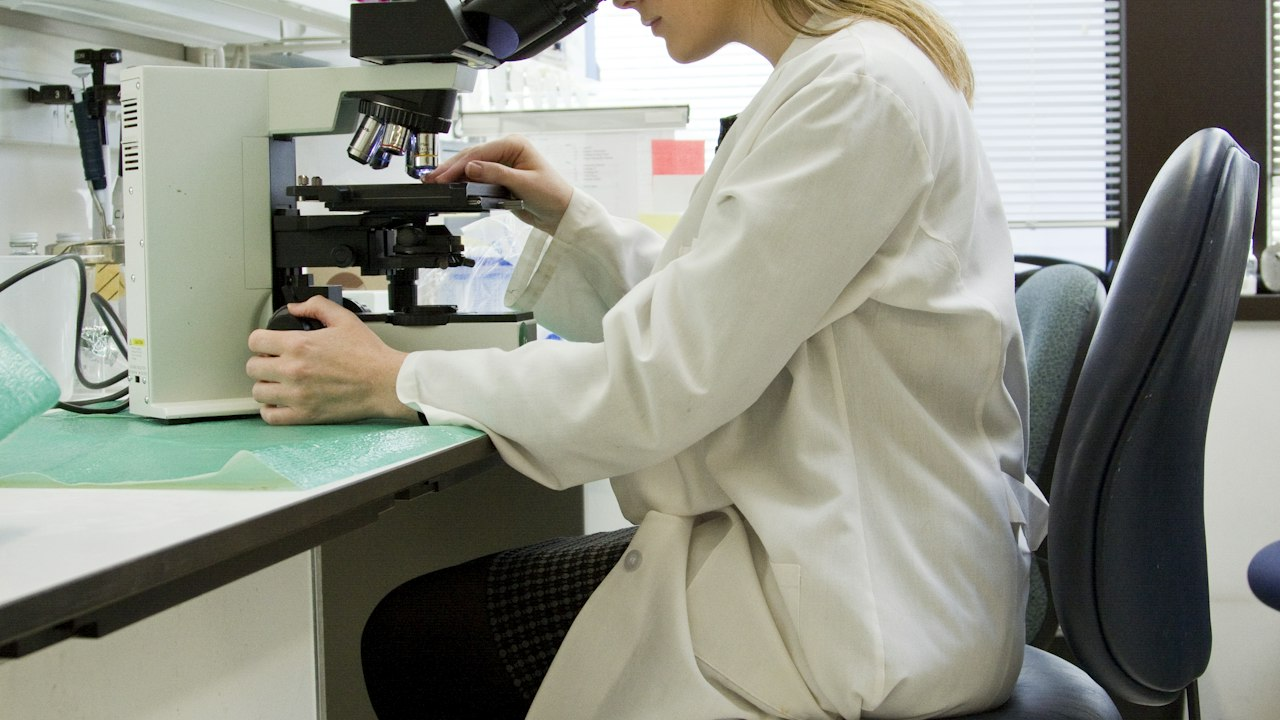
According to Reuters, Anthropic partnered with a Bay Area experimental group to express candidate enzymes, assay activity, and rule out false positives. That loop—model proposes, bench disposes—is the practical template Amodei has promoted for responsible scientific AI.
TechCrunch noted that timelines compressed because literature review, motif clustering, and experimental design drafts could be iterated overnight inside Claude Projects, while pipettes and incubators still set the hard limits on proof.
Amodei’s case for AI-accelerated biology
Amodei used the ART announcement to restate Anthropic’s thesis that carefully scaffolded models can widen the scientific search space without unsupervised self-experimentation. Reuters quoted the company’s emphasis on human oversight for any dual-use biological insight.
Competitors at Google DeepMind and OpenAI have published their own biology collaborations; Anthropic’s differentiator here is the explicit Claude-branded narrative tied to a concrete enzyme class rather than a general benchmark claim.
What comes next for ART research
Open questions include delivery methods, specificity, and whether ART tools can be engineered as safely as CRISPR platforms that already have clinical track records. Peer-reviewed detail will matter more than launch-day metaphors.
For now, Anthropic Claude ART stands as a September 2026 proof point: large language models can triage phage dark matter, Bay Area labs can validate the hits, and CRISPR comparisons are a starting analogy—not the final scientific word.
From phage dark matter to toolkits
If ART enzymes prove controllable, toolmakers will ask the same questions CRISPR companies answered a decade ago: off-target risk, delivery into human cells, manufacturing yield, and intellectual-property thickets around phage-derived parts. TechCrunch cautioned that announcement-day analogies travel faster than characterization data.
Reuters emphasized that Anthropic’s public materials stress disclosure and external scientific co-authors rather than a closed demo. That posture matters for universities and biotech startups that want to use Claude for hypothesis generation without triggering compliance alarms.
Boston’s dense biotech corridor will watch whether ART protocols show up in preprint form and whether reagent suppliers start listing related kits. Until then, Anthropic Claude ART is best read as a credible AI-plus-wet-lab case study, not a ready-to-ship therapeutic platform.