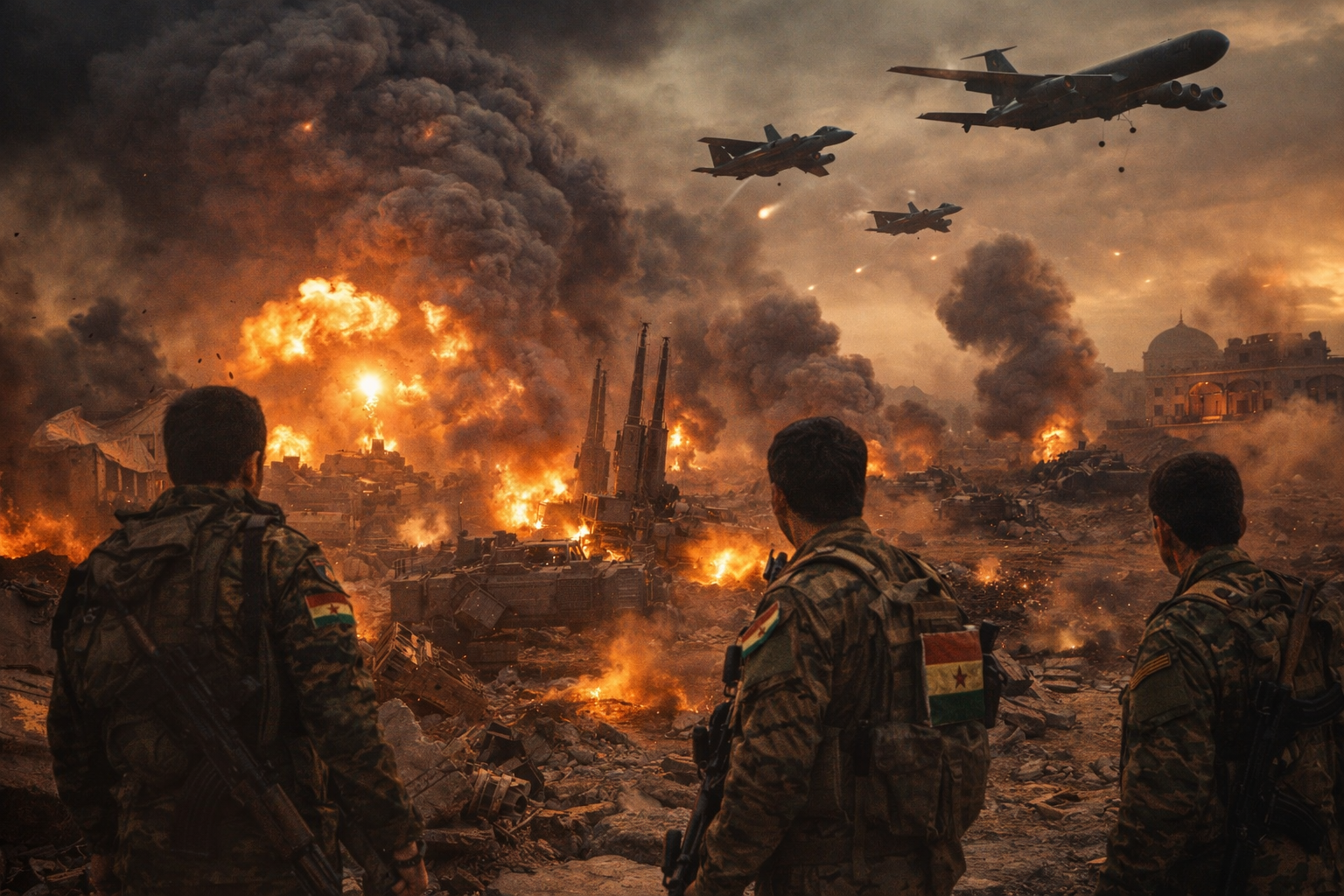
The rapidly expanding war involving Iran, the United States, and Israel has entered a new phase as large-scale air and missile strikes continue across Iranian territory. Military officials say the campaign has already destroyed thousands of targets and significantly weakened Iran’s military infrastructure.
According to the U.S. military’s Central Command, more than 3,000 strikes have been conducted in the first week of fighting, hitting key military facilities across Iran. These attacks have targeted command centers, missile launch sites, air defense systems, and naval assets belonging to Iran’s powerful Islamic Revolutionary Guard Corps. Officials say dozens of Iranian naval vessels have been destroyed and many missile systems have been taken offline.
The strikes are part of a coordinated air campaign involving the United States and Israel designed to degrade Iran’s ability to launch missiles, drones, and naval attacks in the region.
Massive Air Campaign
In the opening days of the war, U.S. and Israeli aircraft struck nearly 2,000 targets in roughly the first 100 hours of the campaign, including military bases, drone storage facilities, and ballistic missile launchers.
Airstrikes have also intensified in western Iran and the Kurdish-majority provinces near the Iraqi border. In those regions alone, more than 100 military bases and security facilities were targeted during the early phase of the air campaign, according to reports from the region.
The objective of these strikes is to dismantle Iran’s command structure and reduce its ability to retaliate across the Middle East.
Heavy Fighting Expected for Weeks
Military planners believe the conflict could involve roughly six weeks of intense military operations, primarily dominated by air and missile strikes. However, analysts caution that wars rarely unfold according to predictions.
“Military timelines often change quickly,” one defense analyst noted. “Wars are unpredictable, and escalation or political developments can alter the course of the conflict.”
The fighting has already spread beyond Iran’s borders, with Iranian missile and drone attacks targeting U.S. bases and infrastructure across the Middle East. Iranian forces have also attempted to strike radar and missile defense systems used by U.S. and allied militaries.
Possible Ground Offensive
So far, the war has been fought largely from the air. But analysts say any ground campaign inside Iran would likely involve local forces rather than large numbers of American troops.
Experts believe Kurdish militias operating near the Iraqi-Iranian border could play a major role in any ground offensive, particularly in the mountainous regions of western Iran. Kurdish fighters have long opposed the Iranian government and have active networks along the frontier.
If such an operation were to occur, it would most likely rely heavily on U.S. and allied air power providing close air support, intelligence, and precision strikes against Iranian positions while Kurdish forces conduct operations on the ground.
Regional Stakes
The conflict has already become one of the largest military operations in the Middle East in decades. Massive deployments of aircraft, naval forces, and missile defense systems have been reported across the region as both sides prepare for further escalation.
With thousands of targets already destroyed and military operations continuing daily, the coming weeks could determine whether the conflict remains an air campaign or evolves into a broader regional war.
For now, military officials say the campaign is far from over—and that the next phase of the war could be decisive.