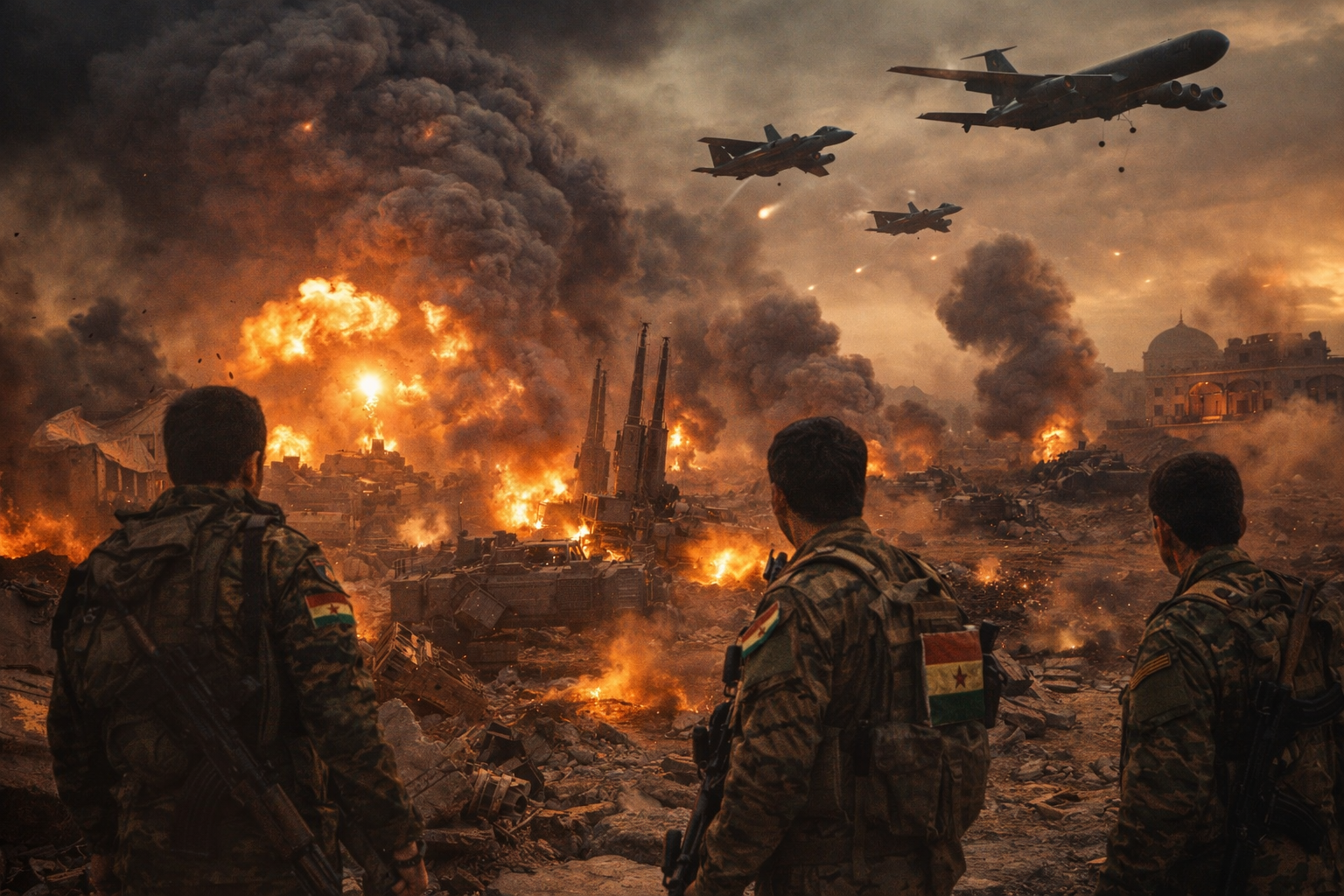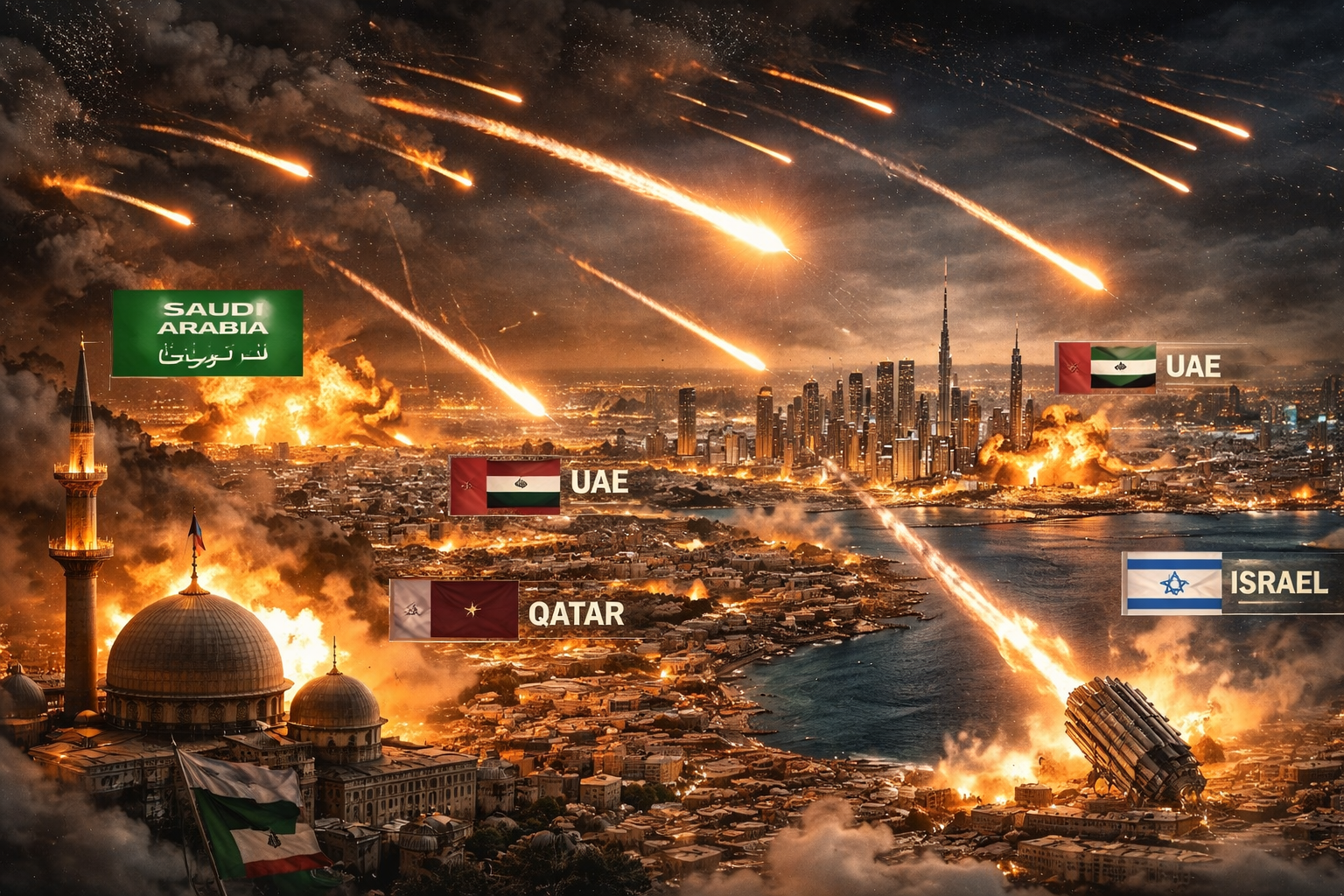
Iran has launched waves of missiles and drones across the Middle East as the war with the United States and Israel continues to escalate, striking multiple countries that host American forces or strategic infrastructure. The attacks mark one of the largest regional missile campaigns in decades and have drawn sharp reactions from governments across the region.
Iranian officials say the strikes are aimed primarily at American military installations and allied assets. However, missiles and drones have crossed into or targeted several countries including Saudi Arabia, Bahrain, Kuwait, Qatar, Jordan, the United Arab Emirates, and Israel, turning the conflict into a broader regional crisis.
Barrages Across the Gulf
Some of the heaviest missile and drone attacks occurred across the Persian Gulf. Gulf states reported large numbers of Iranian projectiles targeting airports, oil facilities, and military bases.
In the United Arab Emirates, officials reported that air defenses intercepted 16 ballistic missiles and more than 100 drones in one barrage, although a few drones still landed inside the country.
Qatar also experienced missile attacks, with officials saying 66 missiles were launched toward the country. Most were intercepted by air defense systems, though falling debris injured civilians and caused damage in several areas.
In Kuwait, hundreds of Iranian drones and missiles were reportedly intercepted during the early stages of the conflict, though several casualties were reported and damage occurred near military installations hosting U.S. forces.
Bahrain and Strategic Infrastructure
The small island nation of Bahrain, home to the U.S. Navy’s Fifth Fleet headquarters, was also targeted. Missile and drone strikes damaged buildings and struck areas near the naval base. Debris and explosions injured civilians, and at least one worker was reported killed.
Iranian drones also damaged a desalination plant in Bahrain, highlighting how critical infrastructure such as water supplies could become targets in the expanding conflict.
Jordan and Regional Air Defense
Further west, Jordan reported intercepting several Iranian missiles and drones that entered its airspace. Joint air defense operations involving Jordanian and U.S. forces shot down multiple projectiles, though falling debris injured several civilians.
Jordan’s military said it would continue defending its territory and warned that further violations of its airspace could lead to stronger responses.
Regional Reactions
The missile campaign has triggered strong reactions across the region.
Saudi Arabia warned Iran that continued attacks could lead to retaliation and signaled it may allow expanded U.S. military operations from its territory if strikes continue.
Many Gulf governments have condemned the missile attacks as violations of sovereignty and called for an immediate end to the escalation. Regional organizations and diplomatic groups have also warned that the strikes risk dragging the entire Middle East into a wider war.
A Region on Edge
For decades, Iran often relied on proxy groups rather than directly striking neighboring states. The current conflict marks one of the first times Tehran has launched large-scale missile attacks directly across the region.
Military analysts say the strategy is designed to pressure countries hosting U.S. bases while demonstrating Iran’s ability to strike throughout the Middle East. However, the attacks have also pushed many of those same countries closer to the United States and its allies for protection.
With missile exchanges continuing and air defenses across the region on high alert, officials warn that the conflict could continue to expand if diplomatic efforts fail to contain the war.