Overview
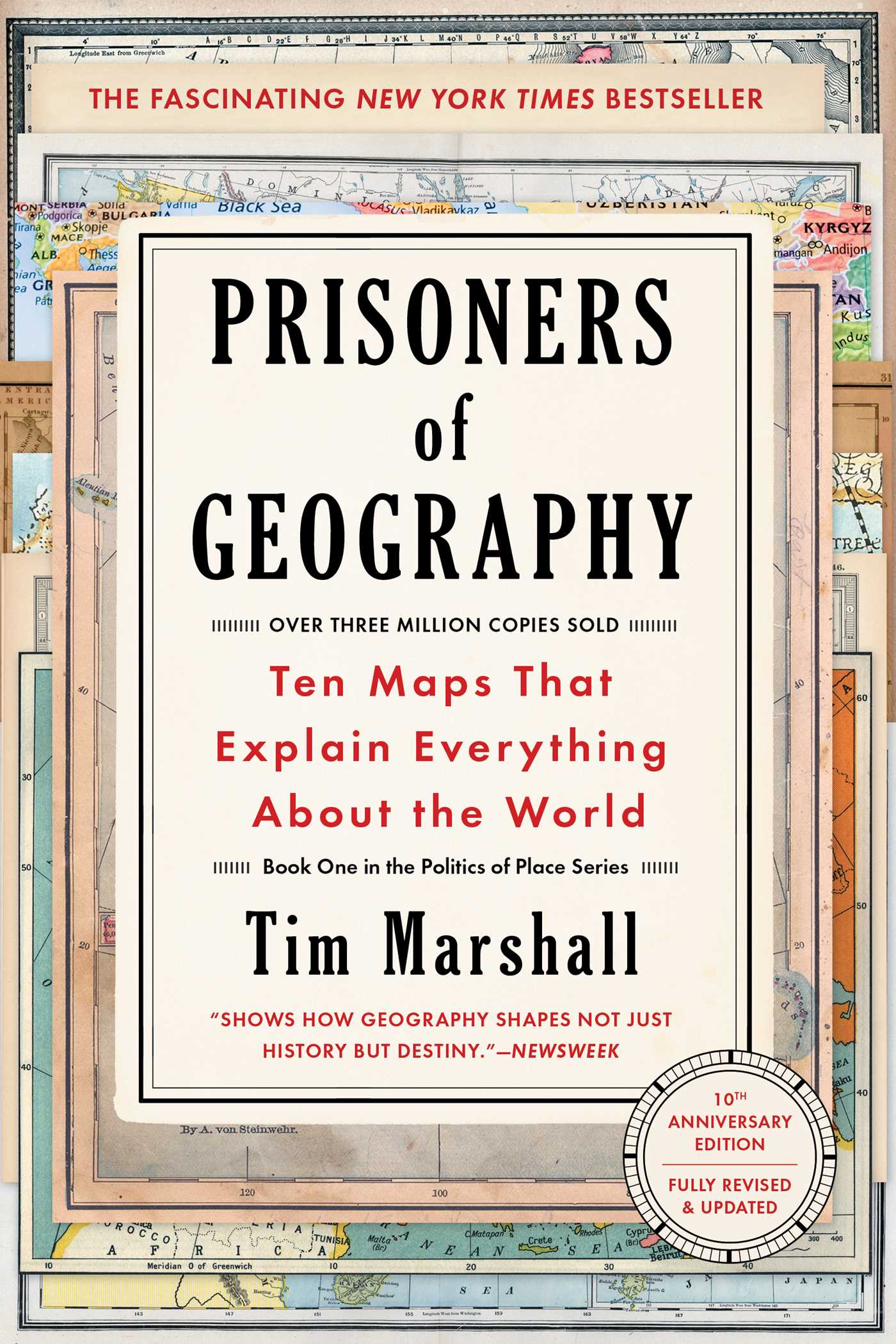
Prisoners of Geography: Ten Maps That Tell You Everything You Need to Know About Global Politics is a widely read geopolitical book published in 2015. In it, British journalist and foreign affairs analyst Tim Marshall argues that geography strongly shapes the political decisions, security concerns, and economic opportunities of nations. According to Marshall, mountains, rivers, oceans, climate, and natural resources create structural constraints that countries cannot easily escape.
The central thesis is simple: leaders may change, ideologies may change, but geography remains constant, and therefore continues to influence global strategy.
Core Argument
Marshall argues that many global conflicts and alliances can be understood through physical geography. Countries must operate within the limits imposed by terrain, climate, access to sea routes, and proximity to rivals. These geographic realities affect:
- Military strategy
- Economic trade routes
- Political alliances
- Resource competition
- National security priorities
The book uses ten regional case studies to explain these dynamics.
Major Geographic Case Studies
1. Russia
Russia’s geography has few natural defensive barriers across its western plains. Because of this vulnerability, Russian leaders historically attempted to expand outward to create buffer zones. This helps explain Russian involvement in Eastern Europe and neighboring regions.
Key geographic factors:
- Vast open plains
- Harsh winters
- Limited warm-water ports
2. China
China’s geography includes mountains, deserts, and rivers that historically separated different regions. Today China seeks stability along its borders and access to trade routes.
Key factors:
- Himalayas forming a natural southern barrier
- Rivers supporting dense populations
- Strategic interest in the South China Sea
3. United States
The United States benefits from extremely favorable geography.
Key advantages:
- Two large oceans acting as natural defenses
- Navigable river systems for trade
- Fertile agricultural land
- Friendly neighboring countries
Marshall argues that these advantages helped the U.S. develop into a global superpower.
4. Western Europe
Europe’s geography includes many natural divisions—mountains, rivers, and peninsulas—which historically produced many independent states. This fragmentation contributed to centuries of competition and conflict.
However, the region’s navigable rivers and coastline also helped create global trade and colonial expansion.
5. Africa
Marshall highlights how Africa’s geography has complicated development.
Key issues include:
- Few navigable rivers
- Harsh deserts and dense jungles
- Colonial borders that ignored ethnic and geographic realities
These factors make transportation, political stability, and economic integration difficult.
Key Themes
Geography Shapes Power
Countries with access to sea routes, fertile land, and natural defenses often have major strategic advantages.
Natural Barriers Influence Security
Mountains, deserts, and oceans often define where conflicts occur or where countries feel vulnerable.
Geography Influences Economics
Trade routes, ports, and resource access can determine whether a nation becomes wealthy or struggles economically.
Strengths of the Book
- Clear and accessible explanation of geopolitics
- Uses simple maps and examples
- Helps readers understand current international tensions
- Connects history, geography, and politics
Marshall makes complex geopolitical issues easy to understand for general readers.
Criticisms
Some scholars argue the book overemphasizes geography and underestimates other factors such as:
- Technology
- Political leadership
- Economic systems
- Cultural influences
While geography is important, critics say it should not be viewed as destiny.
Conclusio
Prisoners of Geography argues that the physical world places limits on political power and strategy. Nations may attempt to overcome these limits, but mountains, oceans, climate, and resources continue to shape global politics.
The book offers readers a powerful framework for understanding why countries behave the way they do in international relations. By examining maps and terrain, Marshall shows that many geopolitical tensions are rooted not just in ideology or policy—but in the geography of the planet itself.