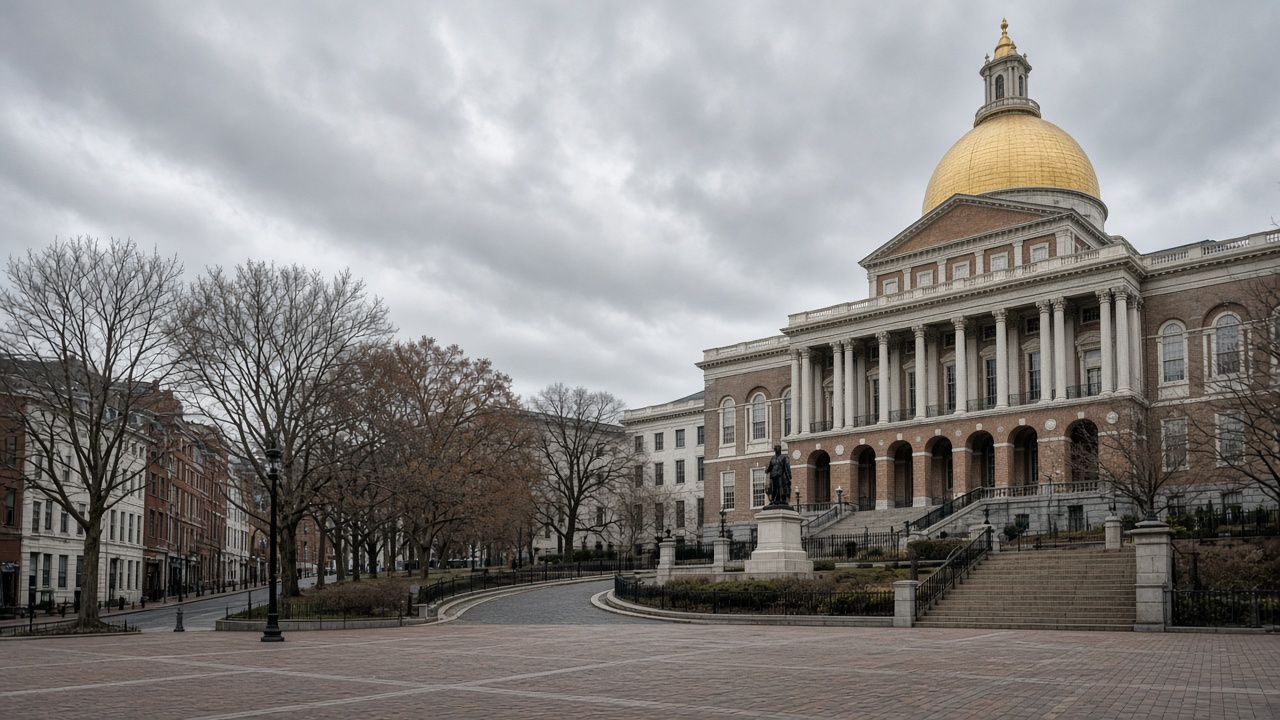
Governor Maura Healey filed a $2.24 billion Healey supplemental budget Boston package on Wednesday, September 23, 2026, aiming to shore up MassHealth, SNAP staffing, and several affordability measures as lawmakers race to close the commonwealth’s fiscal year 2026 books, according to State House filings and WBUR reporting on September 24.
The proposal lands at a moment when federal coverage changes tied to the One Big Beautiful Bill Act are expected to strain MassHealth, the Health Connector, and the Health Safety Net. Healey’s filing asks the Legislature to move quickly so late appropriation bills can still clear formal sessions before the books close.
Healey supplemental budget Boston targets MassHealth stability
At the center of the filing is a new Health Care Stabilization Fund meant to cushion MassHealth, the Connector, and the Health Safety Net against projected coverage losses. Healey’s budget office framed the fund as a bridge while federal reimbursements and enrollment rules shift under the new national law.
MassHealth accounts for the largest slice: about $1.8 billion in gross spending, or roughly $1.03 billion net after federal reimbursements. Officials said the net figure is what Beacon Hill must cover from state sources once matching dollars are counted.
Rather than tapping the rainy-day fund outright, the administration proposes diverting a portion of excess capital-gains revenue that would otherwise flow into the stabilization reserves. That financing choice is already drawing early scrutiny from fiscal hawks who want the rainy-day balance protected for a downturn.
SNAP staffing and payment accuracy get $41.5 million
The Department of Transitional Assistance would receive $41.5 million tied to SNAP. Of that, $26.6 million would retain 78 recently added caseworkers and hire 10 more, while about $15 million would fund technology and staff work needed to meet federal payment-accuracy rules.
Advocates for low-income households in Greater Boston have warned that caseloads already stretch wait times for food benefits. Healey’s filing presents the SNAP package as both a service expansion and a compliance investment intended to avoid federal penalties.
Electricity purchasing, gas tax pause, and ticket resale caps
Beyond health and nutrition, the supplemental includes an overhaul of basic-service electricity purchasing that the administration pitches as roughly $610 million in potential ratepayer savings. Healey also asked for a two-month suspension of the state gas tax, citing price spikes linked to the Iran war, and a concert ticket resale cap at 110 percent of face value.
Smaller health and public-safety items round out the ask: $2 million for newborn home visiting, $250,000 for the Child Psychiatry Access Program for Moms, a $134 million sheriffs reserve, and about $6 million for the Cannabis Control Commission. Each line is modest beside MassHealth but signals political priorities for families and county jails.
House Ways and Means next as FY2026 clock ticks
Healey urged lawmakers to enact the package promptly. House Ways and Means is expected to receive a chamber version, and leadership has left open the possibility of formal sessions for late appropriation bills. Boston hospitals, community health centers, and municipal budget offices will watch the Stabilization Fund language closely because enrollment swings in MassHealth ripple into city clinics and safety-net hospitals.
For now, the Healey supplemental budget Boston debate is less about whether MassHealth needs a backstop and more about how to pay for it without draining reserves. Capital-gains diversions, SNAP hiring, and the electricity purchasing rewrite will define the weeks ahead on Beacon Hill as FY2026 nears its close.