The conflict surrounding Iran has entered a new and increasingly dangerous phase, with military, economic, and diplomatic pressures converging at the same time. Recent reports indicate that the central issue is no longer only regional influence or proxy warfare, but also the future of Iran’s nuclear program and control of critical energy routes in the Persian Gulf.
Iran Refuses to Remove Enriched Uranium
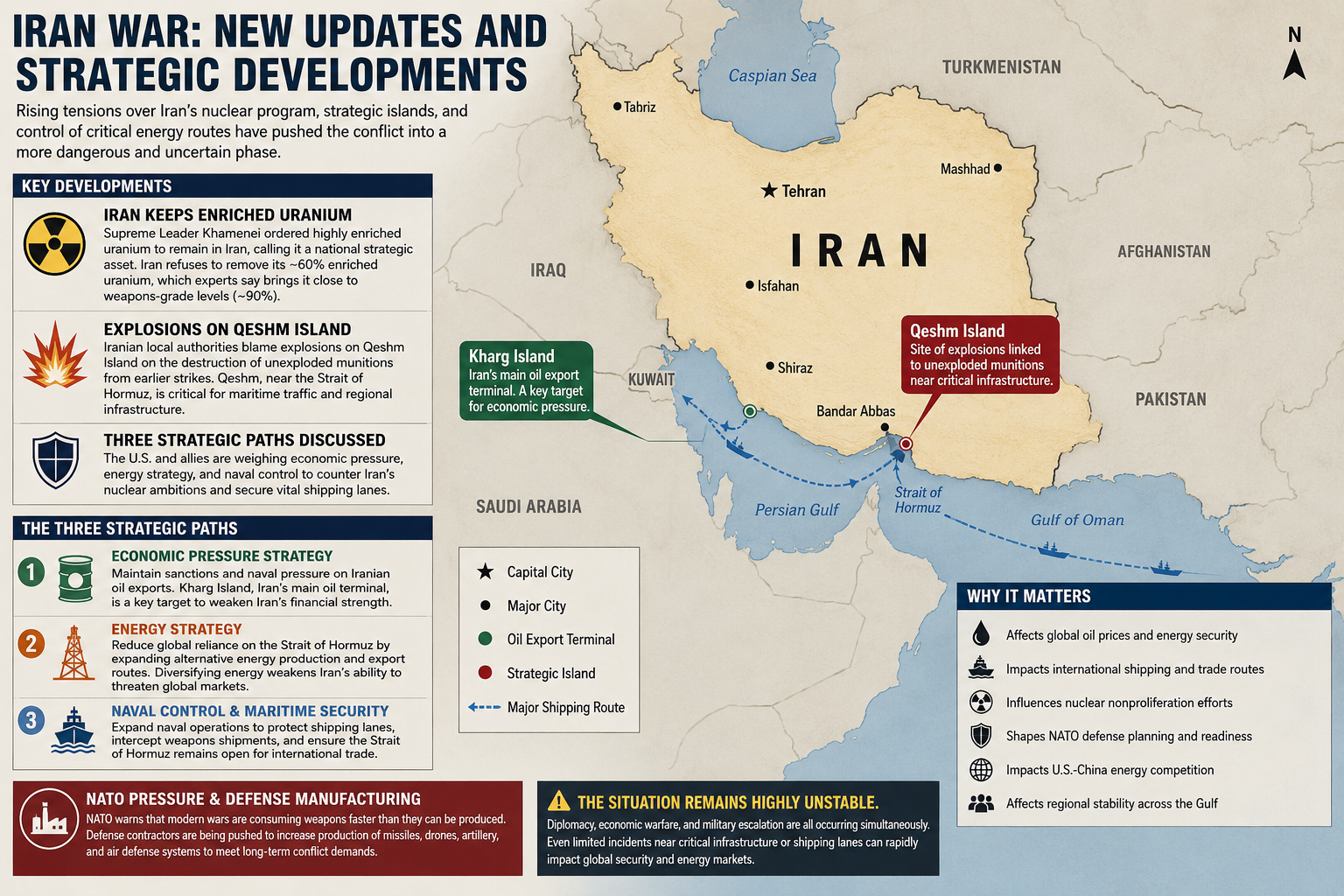
One of the biggest recent developments is Iran’s reported refusal to move its highly enriched uranium stockpile out of the country. According to multiple reports, Iranian Supreme Leader Mojtaba Khamenei ordered that the uranium remain inside Iran despite international pressure.
The dispute centers around uranium enriched to roughly 60% purity. Weapons-grade uranium is generally considered around 90%, meaning 60% enrichment is already technically very close to military capability. Analysts and nuclear experts argue that retaining this stockpile gives Iran what is often called a “nuclear breakout capability,” meaning the country could potentially accelerate toward weaponization if political leadership chose to do so.
Iran, however, argues that exporting the material would leave the country strategically vulnerable. Iranian negotiators reportedly fear that if uranium leaves Iran, foreign powers could later use military pressure while Tehran has lost its bargaining leverage.
Explosions and Infrastructure Damage on Qeshm Island
Iranian local authorities also reportedly attributed explosions on Qeshm Island to the destruction of unexploded munitions following earlier military strikes. Qeshm Island sits near the Strait of Hormuz, one of the most strategically important maritime chokepoints in the world.
The island became internationally significant after reports of attacks on desalination and infrastructure facilities earlier in the conflict. Environmental and humanitarian experts warned that attacks on water infrastructure in the Gulf region could create major civilian hardships because many communities rely heavily on desalination plants for fresh water.
The Three Strategic Paths Being Discussed
Military analysts and policy experts are increasingly discussing three possible strategies the United States and its allies could pursue moving forward.
1. Economic Pressure Strategy
This approach focuses on maintaining severe sanctions and naval pressure on Iranian oil exports. Kharg Island, Iran’s primary oil export terminal, has become a major focal point because it handles most of the country’s oil exports. Reports indicate that U.S. planners have considered blockades or military pressure around the island to weaken Iran financially.
The logic behind this strategy is that reducing oil revenue limits Iran’s ability to fund military programs, missile production, and regional proxy groups.
2. Energy Strategy
Another strategy involves reducing global dependence on the Strait of Hormuz by increasing alternative energy production and export infrastructure elsewhere. The Strait remains one of the most important shipping lanes on Earth because a large percentage of global oil and liquefied natural gas passes through it daily.
Supporters of this strategy argue that expanding domestic U.S. energy production and diversifying global energy routes would weaken Iran’s ability to threaten global markets through maritime disruption.
3. Naval Control and Maritime Security
A third approach involves expanded naval operations aimed at securing shipping lanes and protecting commercial traffic. This includes escort operations, interception of weapons shipments, and efforts to keep the Strait of Hormuz open to international trade.
Some reports suggest discussions have occurred regarding possible operations near Kharg Island or other strategic Iranian maritime facilities, though analysts warn that any large-scale seizure operation would carry major economic and military risks.
NATO Pressure and Defense Manufacturing Concerns
Another emerging issue is the pressure being placed on Western defense industries. NATO officials have increasingly warned that modern conflicts are consuming weapons, missiles, and air defense systems faster than many countries can produce them.
Reports indicate NATO leadership has pushed defense contractors to significantly increase production capacity amid fears that prolonged conflicts in Europe and the Middle East could strain Western military stockpiles. The concern reflects a broader reality of modern warfare: industrial capacity is once again becoming a decisive strategic factor. Nations that can rapidly manufacture missiles, drones, artillery shells, and air defense systems may gain long-term advantages in extended conflicts.
Why the Situation Matters Globally
The Iran conflict affects far more than the Middle East alone. The crisis influences:
- Global oil prices
- International shipping routes
- Nuclear nonproliferation efforts
- NATO defense planning
- U.S.-China energy competition
- Regional stability across the Gulf
The situation remains highly unstable because diplomacy, economic warfare, and military escalation are all happening simultaneously. Even limited incidents near critical infrastructure or shipping lanes can quickly impact world energy markets and international security calculations.
At the center of the issue remains Iran’s nuclear program and whether negotiations can prevent further escalation while still addressing international concerns about uranium enrichment and regional security.