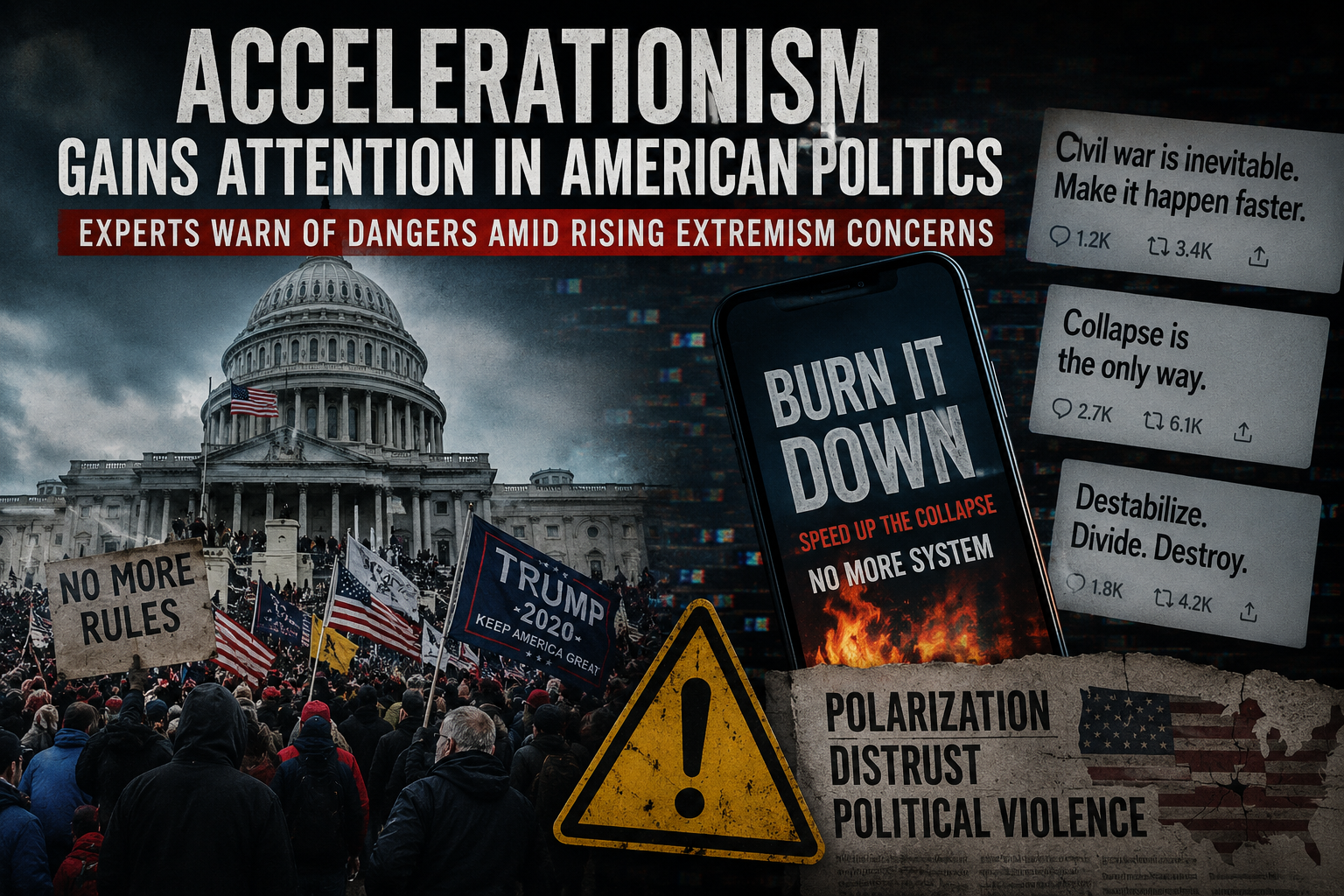
Accelerationism — once considered a fringe philosophical theory — is increasingly becoming part of conversations surrounding political extremism, online radicalization, and polarization in the United States.
At its core, accelerationism is the belief that existing political, economic, or social systems should be pushed toward greater instability in order to force dramatic change. While the concept exists in both left-wing and right-wing political circles, security experts warn that some extremist groups have adopted dangerous forms of accelerationist thinking tied to violence and societal collapse.
In American politics, accelerationist rhetoric often appears online through calls to intensify political division, undermine trust in democratic institutions, or provoke social unrest. Analysts say social media algorithms, viral outrage culture, and hyper-partisan media environments can unintentionally amplify these ideas.
Federal law enforcement agencies have previously identified accelerationist ideologies as a concern in domestic extremism investigations, particularly among violent extremist networks that believe chaos can accelerate political transformation. Some groups advocate targeting infrastructure, increasing racial tensions, or spreading fear in hopes of destabilizing society.
Experts warn the danger of accelerationism lies in its rejection of gradual reform and democratic compromise. Instead of working through institutions, accelerationist movements often frame collapse itself as desirable.
Critics argue this mindset can fuel:
- Political violence
- Online radicalization
- Conspiracy movements
- Distrust in elections
- Extremist recruitment
The rise of artificial intelligence, economic uncertainty, and growing political polarization has also intensified concerns that Americans are entering a period of rapid social and technological change without strong institutional safeguards.
Political analysts note that while most Americans do not support extremist accelerationist ideas, the broader environment of anger, distrust, and digital misinformation creates fertile ground for more radical narratives to spread online.
As the 2026 political climate becomes increasingly tense, experts say understanding accelerationism is important not only for national security officials, but for the broader public navigating an era of growing political instability in the United States.