Supporting the troops is a phrase often heard in political speeches, on bumper stickers, and during national holidays. But beyond symbolism, real support for service members must extend to the families who stand behind them—quietly carrying the emotional, financial, and logistical burdens of military life.
The Reality of Military Family Life
When a service member deploys, the entire family serves in a different way. Spouses often take on dual roles—managing households, raising children, and navigating uncertainty alone. Children grow up with long absences, missed milestones, and the constant anxiety of not knowing when their parent will return.
Military families move frequently, sometimes every two to three years. This disrupts careers, education, and community ties. For spouses, maintaining stable employment can be extremely difficult. For children, it can mean repeatedly starting over socially and academically.
During times of conflict or heightened global tension, these challenges intensify. Stress, anxiety, and isolation can become overwhelming. Supporting the troops, therefore, must include recognizing and addressing the needs of these families at home.
A Gap in Understanding
There is also a cultural and political gap that deserves acknowledgment. Many critics argue that parts of the political left, including some within the Democratic Party, do not engage deeply enough with military families or fully understand their day-to-day realities—especially during wartime.
This is not necessarily about opposition to war or defense policy, but about connection. Military families often feel overlooked in broader political conversations. Their struggles—childcare during deployment, mental health support, spouse employment—rarely become central talking points.
Bridging this gap requires more than rhetoric. It requires listening, policy attention, and consistent engagement with military communities across the country.
The Role of Nonprofits
One area where meaningful support is happening is through nonprofit organizations. These groups step in to fill critical gaps, offering services that government programs sometimes cannot fully provide.
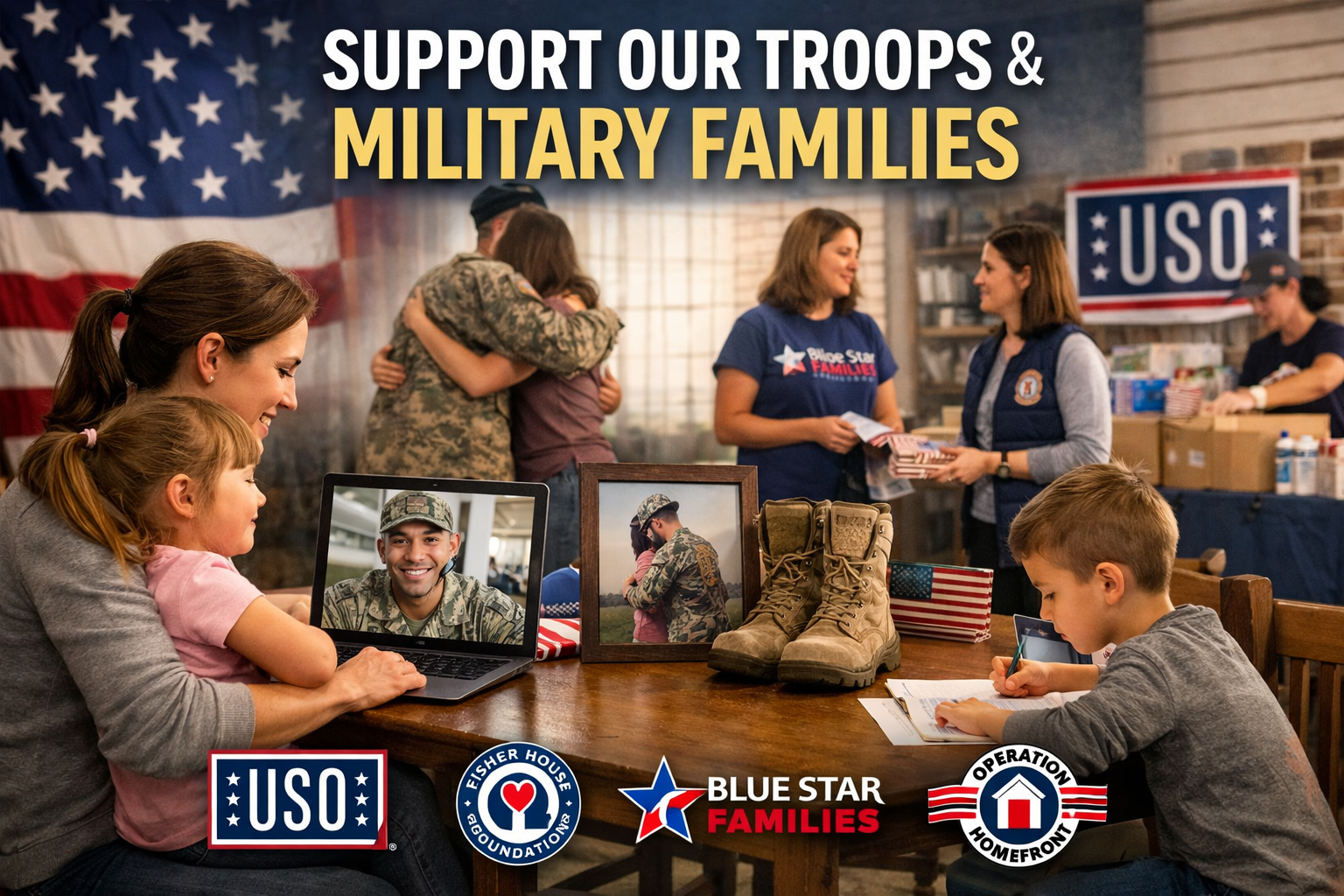
Organizations like United Service Organizations provide morale-boosting services, care packages, and support centers for deployed troops and their families. The Fisher House Foundation offers free lodging for families of service members receiving medical care, easing both emotional and financial strain.
Similarly, Blue Star Families focuses on strengthening military families by addressing issues like employment, education, and mental health. Meanwhile, Operation Homefront provides direct financial relief, housing assistance, and emergency support.
These organizations highlight a critical truth: supporting the troops is not just about the battlefield—it’s about sustaining the home front.
What Real Support Looks Like
True support for military families involves a combination of public awareness, policy changes, and community involvement:
- Employment support for spouses through portable careers and remote work opportunities
- Access to mental health services tailored to the unique stresses of military life
- Improved childcare and education stability for military children
- Stronger community integration to reduce isolation after relocations
- Consistent political engagement from leaders across all parties
Conclusion
Supporting the troops must go beyond slogans. It requires a deeper commitment to the families who sacrifice daily in ways that often go unseen. While nonprofits are doing critical work, broader cultural and political understanding is still needed.
If the nation truly values its military, it must also value the families who make that service possible.