Boston winters are famously wet, cold, and unpredictable. From late December through early March, you’ll deal with a mix of heavy snowstorms, freezing rain, slush, and ice. Temperatures routinely dip below freezing, and sidewalks and roads can get slick. That means your winter boots need to do three things well:
- Keep water & slush out — Waterproofing is essential.
- Provide warm insulation — Bare rubber boots alone often aren’t enough in sub-freezing weather.
- Deliver solid traction — Ice and compact snow are everywhere in the city and suburbs.
Choosing the right boots can make daily walks, commuting, snow shoveling, or weekend outings much more comfortable and safer.
How to Choose Winter Boots for Boston
Here are the key features you should prioritize:
🥾 1. Waterproofing
Full waterproof construction keeps slush and melting snow from soaking your feet — whether you’re walking downtown or clearing your driveway. Many winter boots combine rubber and neoprene uppers for complete water protection.
🧦 2. Insulation
To stay warm in single-digit temperatures, look for boots with insulated linings (often 200 g to 400 g Thinsulate or similar). Bare rubber on its own doesn’t trap heat.
❄️ 3. Traction
Choose boots with aggressive rubber lugs or specialized winter outsoles to grip snow and ice. Good traction is a major safety factor.
⚖️ 4. Fit & Comfort
Winter boots should have enough room for thermal socks, but not so much that your foot slips inside the boot. Trying on multiple sizes — or ordering from retailers with easy returns — is worth it.
Feature Focus: Carhartt Boots
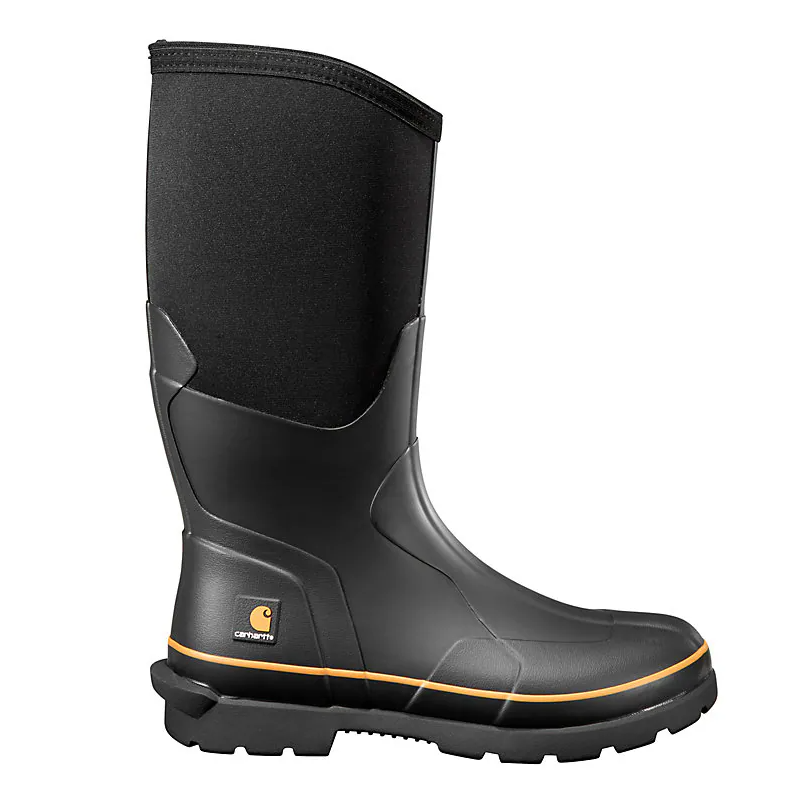
While there are many excellent winter boots on the market, the model you mentioned — the Carhartt men’s 15″ waterproof rubber pull-on boot — is worth understanding in context.
🧰 Carhartt Mudrunner Waterproof 15″ Rubber Boot
Carhartt’s 15″ pull-on boot is built with a rubber/neoprene construction that’s fully waterproof, and features a supportive footbed and slip-resistant outsole. It’s a solid choice if your priority is water protection — for snowmelt, slush, muddy fields, or wet conditions.
However:
- This specific model generally does not include thermal insulation, so it won’t keep feet warm by itself in very cold conditions. Layering with thick wool socks or a winter boot liner may be necessary for temperatures below freezing.
- Some users report mixed durability and fit feedback — it’s best for moderate winter use or work tasks rather than extreme cold.
👉 Bottom line: Great for waterproofing and wet weather, but often not enough on its own for deep snow or very cold Boston winter days unless paired with warm socks or liners.
Other Options
Men’s Insulated Rubber Work Boots