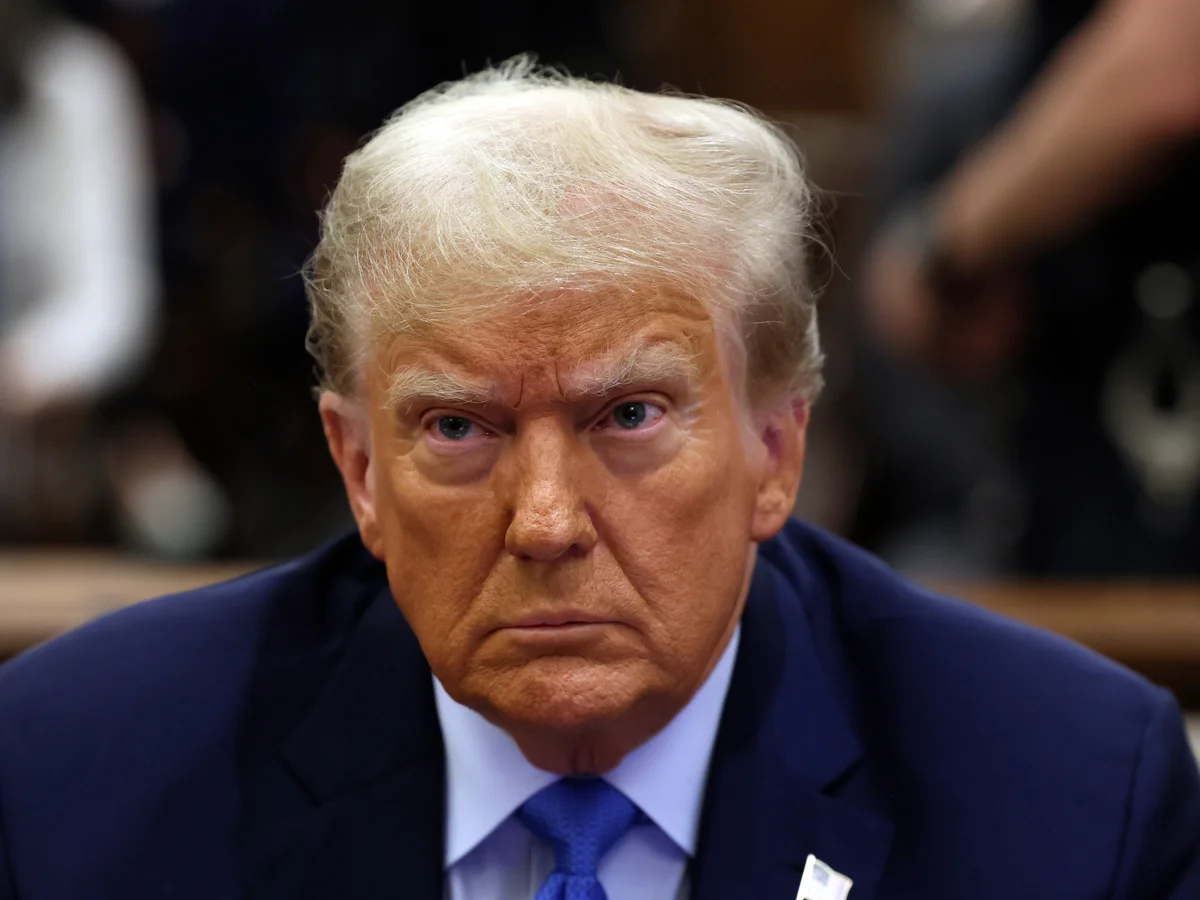
Former President Donald Trump recently made headlines with a dramatic warning that “civilization will die tonight,” a statement that immediately drew attention across political and media circles. While the phrasing is striking, it’s important to recognize it for what it is: hyperbole—a rhetorical device often used in politics to convey urgency, not a literal prediction of global collapse.
Trump has long favored bold, emotionally charged language to emphasize perceived stakes in geopolitical conflicts. In this case, the remark appears aimed at underscoring the seriousness of tensions involving Iran and broader instability in the Middle East. However, such language can blur the line between urgency and alarmism, making it critical for audiences to interpret the message carefully rather than react to it at face value.
Understanding the Situation Beyond the Rhetoric
Despite the dramatic tone, the reality on the ground is more nuanced. Many observers and analysts note that Iranian citizens themselves are not unified behind their government, particularly the powerful Islamic Revolutionary Guard Corps (IRGC). The IRGC has long been a central force in Iran’s military and political structure, but it is also widely criticized—both internationally and domestically—for its role in repression and regional proxy conflicts.
There is growing evidence and sentiment suggesting that many ordinary Iranians are increasingly disillusioned with the regime, especially younger generations who have demonstrated repeatedly for greater freedoms and economic opportunities. In that context, some believe that segments of the Iranian population quietly support efforts that could weaken the IRGC’s grip on power, even if they cannot openly express it.
Iranian Citizens and Western Forces
While it would be an oversimplification to say that Iranian citizens are broadly “aligned” with American troops, there is a more subtle dynamic at play. Many Iranians distinguish between foreign governments and their own leadership. Anti-regime sentiment does not automatically translate into full support for foreign military presence, but it does reflect a desire for change—particularly when it comes to the IRGC’s influence.
In moments of heightened tension, this distinction becomes critical. The narrative is not one of a unified nation preparing for confrontation, but rather a divided internal landscape, where public frustration with leadership coexists with national pride and caution toward foreign intervention.
Strategic Implications
If the IRGC were to be significantly weakened or removed from power, it could reshape the region. Proponents argue that such a shift might:
- Reduce Iran’s involvement in proxy conflicts
- Open the door to internal political reform
- Improve relations with Western nations over time
However, critics warn that destabilizing a powerful institution like the IRGC could also create a power vacuum, leading to unintended consequences.
Final Thoughts
Trump’s statement that “civilization will die tonight” is best understood as political exaggeration meant to signal urgency, not a literal forecast. The deeper story lies in the complex realities within Iran itself—where many citizens are navigating life under a system they increasingly question.
As events unfold, the focus should remain on verified information and measured analysis, not just rhetoric. The stakes are serious, but understanding the difference between language and reality is essential to interpreting what comes next.