The 2026 Iran War continues to expand across the Middle East, with growing military losses, intensified naval deployments, and ongoing indirect negotiations between Tehran and Washington. While active combat operations remain severe, diplomatic channels have not fully collapsed, suggesting both sides are attempting to avoid a wider regional catastrophe.
Diplomatic Messaging Between Tehran and Washington
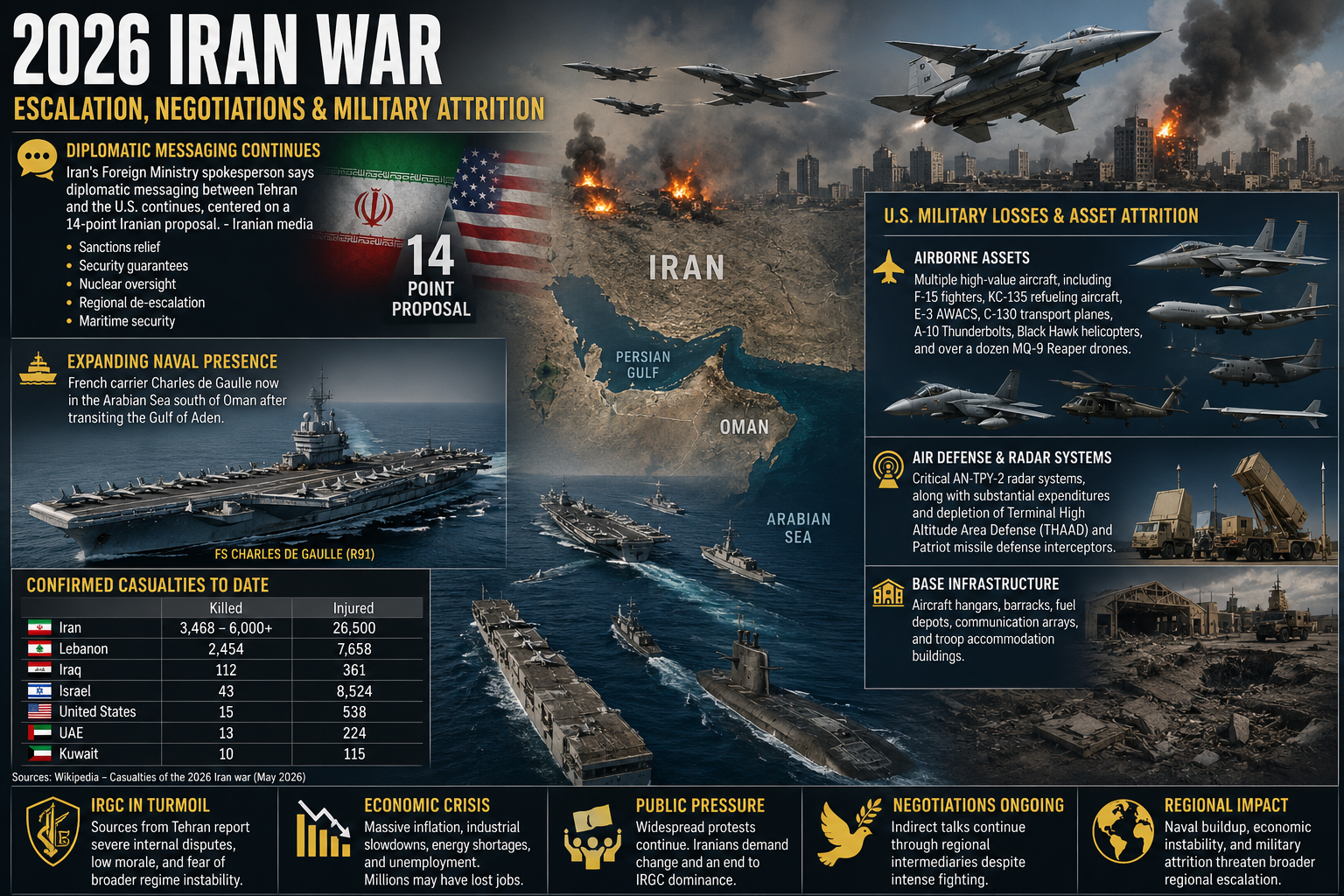
Iranian state media reported today that diplomatic messaging between Tehran and the United States is continuing through intermediaries. According to Iran’s Foreign Ministry spokesperson, the discussions are centered on a new 14-point Iranian proposal.
The proposal reportedly includes:
- phased sanctions relief,
- limits on future military strikes,
- nuclear oversight mechanisms,
- regional de-escalation guarantees,
- maritime security arrangements in the Persian Gulf and Arabian Sea.
Iranian negotiators are believed to be using Gulf intermediaries and regional partners to keep communication channels active while fighting continues.
Despite ongoing talks, both sides remain publicly confrontational. Washington continues to demand major reductions in Iran’s missile and proxy capabilities, while Tehran insists on security guarantees and an end to strategic pressure campaigns.
Expanding Naval Presence
The international naval buildup surrounding the conflict has intensified dramatically.
The French aircraft carrier Charles de Gaulle has now entered the Arabian Sea south of Oman after transiting the Gulf of Aden. The deployment adds additional NATO-aligned airpower and surveillance capability near the Strait of Hormuz and critical regional shipping lanes.
The growing multinational naval presence now includes:
- U.S. carrier strike groups,
- British naval escorts,
- French naval aviation assets,
- expanded Gulf-state maritime patrols.
Military analysts believe the deployments are intended both to deter escalation and protect global energy shipping routes from disruption.
U.S. Military Losses and Asset Attrition
The United States has sustained mounting operational costs during the conflict. While official casualty numbers remain relatively limited compared to historical large-scale wars, equipment losses and infrastructure damage have become increasingly significant.
Airborne Assets Lost or Damaged
Reported U.S. airborne asset losses include:
- F-15 fighter aircraft,
- KC-135 aerial refueling tankers,
- E-3 AWACS surveillance aircraft,
- C-130 transport planes,
- A-10 Thunderbolt attack aircraft,
- Black Hawk helicopters,
- more than a dozen MQ-9 Reaper drones.
The losses highlight the increasing danger posed by Iranian missile systems, drones, cyber warfare, and long-range air defense capabilities.
Air Defense and Radar System Losses
The conflict has also imposed major strain on American missile defense systems and logistics networks.
Reported losses and expenditures include:
- critical AN/TPY-2 radar systems,
- extensive use and depletion of THAAD interceptors,
- heavy Patriot missile interceptor consumption,
- rising operational replacement costs.
Military analysts warn that sustained interceptor usage rates could create long-term readiness concerns if the conflict continues at its current pace.
Base Infrastructure Damage
Multiple forward operating facilities across the region have reportedly sustained damage from missile and drone attacks.
Affected infrastructure reportedly includes:
- aircraft hangars,
- troop barracks,
- fuel storage depots,
- communication arrays,
- accommodation buildings,
- logistics staging areas.
Several bases have been forced to disperse aircraft and personnel to reduce vulnerability to additional strikes.
Iranian Military and IRGC Situation
U.S. and Israeli officials continue to claim major success in degrading Iran’s military infrastructure. Missile production sites, drone facilities, command centers, and IRGC logistical networks have reportedly suffered extensive damage.
At the same time, reports from Tehran suggest growing internal instability within the IRGC itself. Analysts and opposition-linked sources describe:
- deteriorating morale,
- command disputes,
- severe economic strain,
- increasing public anger toward the regime,
- fear of broader internal unrest.
However, claims that the IRGC is on the verge of immediate collapse remain unverified by independent observers.
Economic Conditions Inside Iran
Iran’s economic crisis appears to be worsening rapidly.
Independent analysts report:
- sharp inflation spikes,
- severe industrial slowdowns,
- increasing unemployment,
- transportation disruptions,
- declining purchasing power,
- shortages of imported goods and industrial components.
Multiple estimates suggest millions of Iranians may have lost jobs or income due to sanctions, wartime disruptions, infrastructure damage, and declining industrial output.
Analysts also believe official government economic figures likely understate the severity of the crisis.
Public Sentiment and Political Pressure
Public dissatisfaction inside Iran remains high following years of sanctions, protests, and wartime hardship. Demonstrations against corruption, economic collapse, and IRGC influence had already expanded before the war began.
While some opposition-linked claims state overwhelming public support for removing the IRGC from political power, exact polling figures remain difficult to independently verify due to censorship, internet restrictions, and limits on independent surveying inside Iran.