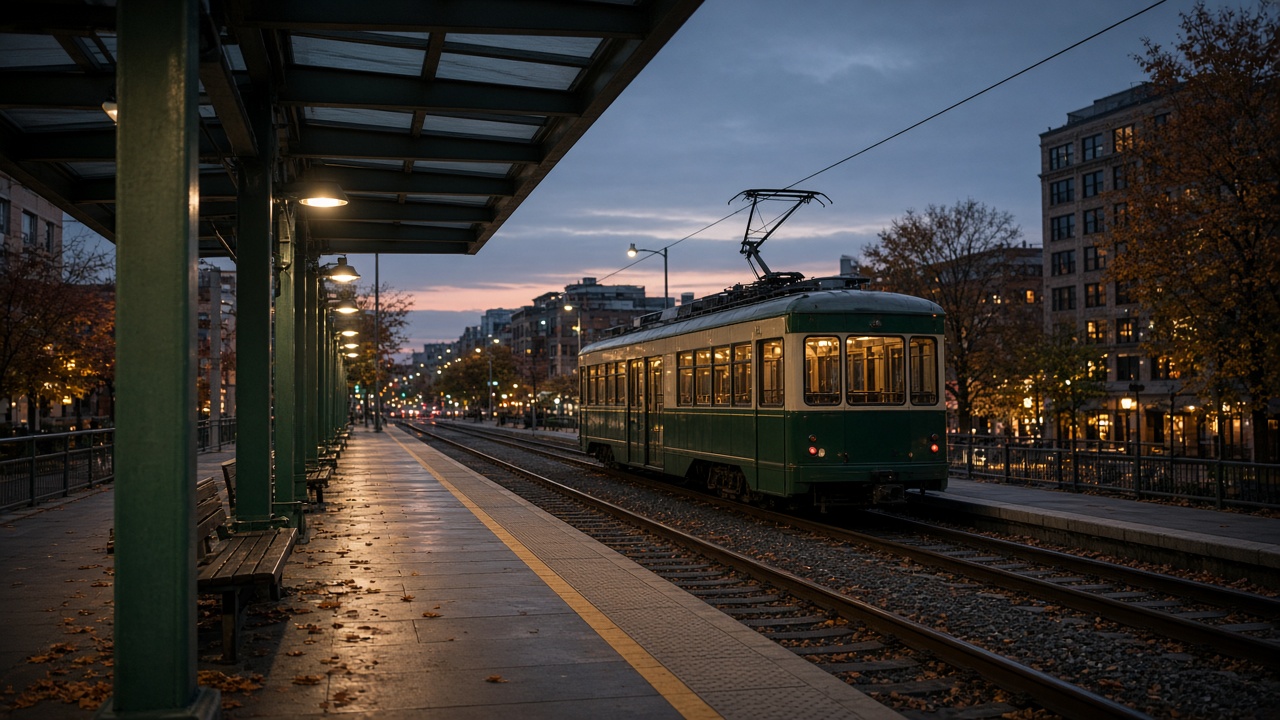
An MBTA Green Line shutdown beginning Saturday will replace rail with buses across major branches for nine days, while the transit agency separately solicits about $120 million in multi-year shuttle contracts—underscoring how long Boston riders should expect track outages to remain routine.
Between Sept. 26 and Oct. 4, the T will suspend Green Line rail service on large segments tied to critical signal upgrades in the central tunnel, according to MBTA alerts and reporting by NBC Boston and State House News Service. Parallel fare-free bus routes and shuttle stops are planned, but trip times are expected to run at least 20 minutes longer than usual.
Which Green Line segments go dark
During the outage window, rail will not operate between Government Center and Babcock Street on the B branch; Government Center and Kenmore on the C branch; North Station and Kenmore on the D branch; and Heath Street and North Station on the E branch. Shuttle buses will replace those segments.
The MBTA has told riders the work cannot be done efficiently overnight or in single-weekend bites. Closing a corridor for multiple days, the agency has argued, lets contractors and T crews work around the clock on maintenance, inspections, and upgrades that follow the earlier Track Improvement Program.
Separate alerts continue to note other constraints riders already know well: Symphony station on the E branch remains closed for major accessibility upgrades expected through about spring 2029, with Prudential, Northeastern, the Orange Line at Massachusetts Avenue, or Route 39 as alternatives. Blue Line single-track work between Wonderland and Revere Beach is also scheduled for the Sept. 26–27 weekend.
Why the T is shopping for $120 million in shuttles
Last week the MBTA began soliciting proposals for a pool of operators to provide turnkey replacement shuttle service—vehicles, drivers, and supervision—for planned and emergency subway, commuter rail, and bus disruptions. The initial two-year package is estimated at roughly $120 million and could extend toward 2032, NBC Boston reported, citing State House News Service.
That figure reflects average monthly shuttle spending in 2025 and 2026. The T expects to continue spending about $5 million per month from April 2027 through March 2029 covering derailments, storms, equipment failures, and planned repair windows. Bids are due Nov. 4, with service under the new contracts targeted to start April 1, 2027. Current shuttle vendors include firms such as A Yankee Line, Paul Revere Transportation, Academy Express, DPV Transportation, and A&A Metro Transportation.
For riders, the procurement is a signal as much as a contract. After the Track Improvement Program removed more than 220 speed restrictions and replaced more than 250,000 feet of rail as 2024 turned into 2025, multi-day closures have not disappeared. A 10-day Red Line closure between Alewife and Park Street in July was one recent example; the coming Green Line window is another.
Capital needs versus daily commute reality
The MBTA’s most recent broad estimate, from November 2023, put the cost of bringing assets to a state of good repair at about $24.5 billion. In May, the MBTA Board approved a five-year, $10.3 billion capital plan framed around modernization, frequency, reliability, decarbonization, and rider experience.
Those numbers explain why shuttle buses keep showing up on Boston streets. They do not erase the friction for students, hospital workers, downtown employees, and Fenway- or Longwood-bound riders who will navigate unfamiliar boarding points and longer door-to-door times through early October.
Accessibility vans are expected for Green Line stops between Copley/Back Bay and North Station during the shutdown, and some parallel bus routes will run fare-free. Even so, the T has urged riders to build in ample extra travel time and follow station signage and on-site staff.
What Boston riders should do this week
Commuters who rely on the Green Line should map shuttle stop locations now—especially around Back Bay, Copley, Kenmore, and North Station—and consider Orange or Red Line transfers where they shorten the walk. Employers and universities along the corridor may see later arrivals during the first week of the outage as people recalibrate.
Looking past Oct. 4, the $120 million shuttle solicitation suggests similar windows will remain part of the Boston transit calendar into the late 2020s. The Green Line shutdown is a near-term inconvenience rooted in signal work; the contracts are a longer admission that replacement buses are still a core operating tool while the system modernizes.