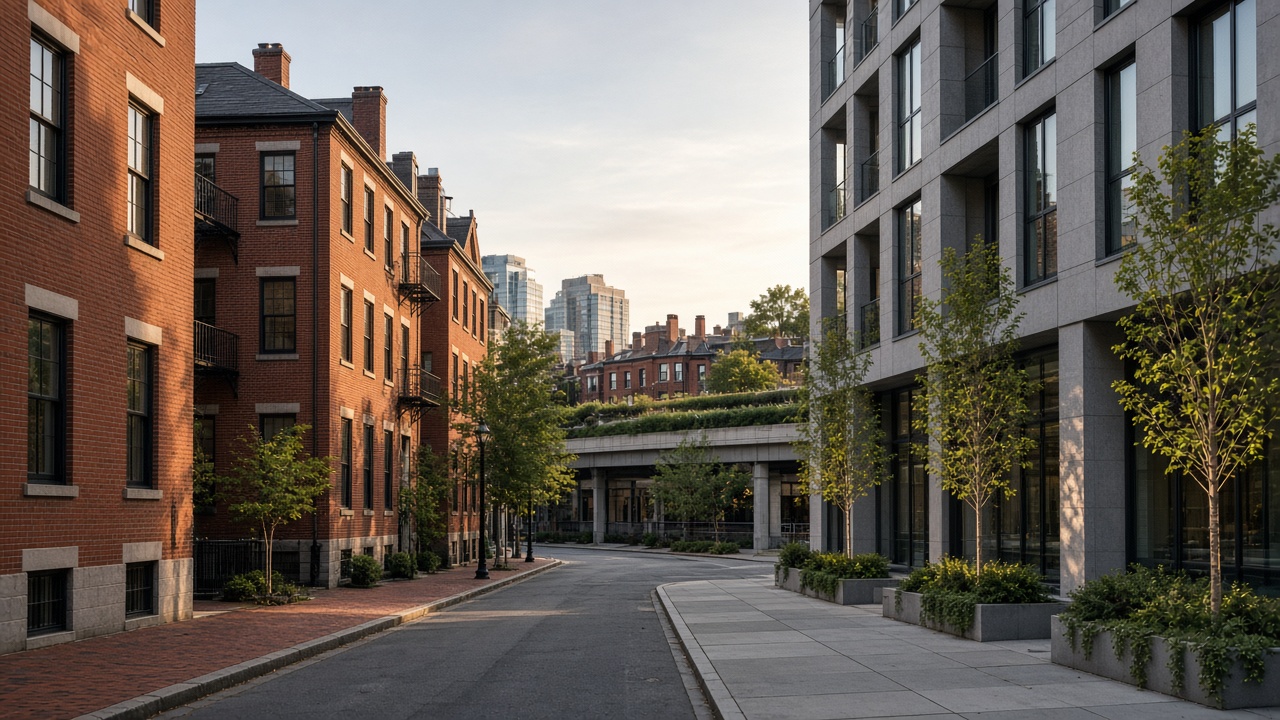
A North End gateway development on Cross Street is nearing completion and already dividing Bostonians over whether a contemporary gray mixed-use building belongs at the entrance to one of the city’s oldest neighborhoods.
The project occupies the block between Hanover Street and Salem Street across from the Rose Kennedy Greenway, on a site that previously held an older grocery and liquor store, NBC Boston reported. Longtime North End businessman and developer Frank DePasquale has promoted shops, restaurants, apartments, and a culinary school as part of a new “gateway” to the neighborhood. As the exterior takes final shape, visitors and locals are arguing loudly about character, color, and what “fitting in” means under Boston zoning.
Why the design debate landed here
The North End’s identity is tightly bound to narrow streets, brick facades, and Italian-American commercial culture—especially during feast season. A large modern building at the Greenway edge is highly visible to tourists stepping off the park and into Hanover Street. That visibility is exactly why supporters call it a gateway and critics call it a mismatch.
NBC Boston’s on-street interviews captured the split. Some visitors called the look modern but out of place, suggested a warmer color palette, or labeled the design “cheesy” or an “assault to the eyes.” Others, including people with recent North End ties, said the building looks beautiful or at least a clear upgrade over what stood there before.
Ernesto’s Pizza owner Anthony Radzikowski told NBC the prior structure was an eyesore for years and that the new block-to-block result looks better. City Councilor-at-Large Erin Murphy framed large neighborhood projects as risky investments that can still improve an area, and voiced confidence in DePasquale’s track record of doing right by the North End.
Zoning’s mixed message on “compatibility”
Article 54 of Boston’s zoning code asks projects to consider neighborhood character through façade treatments, materials, and design, and to weigh a site’s special characteristics. At the same time, the code discourages fake historicism—artificial “old looking” alterations—leaving room for contemporary architecture even in historic districts.
That tension helps explain how a modern gateway can win zoning and planning approval with neighborhood input, then still surprise people when steel, glass, and gray cladding appear at full scale. Compatibility on paper is not the same as consensus on the sidewalk.
NBC Boston noted it was still seeking answers from city boards on whether the as-built appearance matches the designs approved in permitting—an important process question for any high-visibility project.
Culture inside versus cladding outside
Some neighbors argue the North End’s character will ultimately be shaped less by exterior color than by who occupies the retail and culinary spaces. If local businesses and a culinary school animate the block, supporters say, the gateway will feel like the neighborhood regardless of style. If the ground floor skews generic, critics fear a Greenway-edge project that reads as anywhere-USA.
DePasquale has acknowledged criticism but, according to NBC Boston, declined detailed comment beyond urging people to wait until the project is finished before judging it—a familiar developer posture that rarely ends the aesthetic argument, but does underline that scaffolding and incomplete storefronts are a poor final verdict.
What this means for Boston development politics
The Cross Street fight is a miniature of a citywide pattern: Boston needs housing and active ground-floor uses; historic neighborhoods want continuity; zoning tries to split the difference; and social media amplifies first impressions. Waterfront-adjacent and Greenway-edge sites get extra scrutiny because they function as tourist thresholds.
For now, the North End gateway development stands as an approved, nearly complete bet that contemporary design can sit at the front door of a brick neighborhood. Whether Bostonians eventually call it a landmark or a mistake will depend as much on tenants and street life as on the gray façade drawing stares this week.